Booking passage on a container ship should have entailed 28 days without internet. But on a whim I looked into satellite phones and discovered that I could rent a “satellite modem” to access the internet anywhere in the world (except the poles). While using it to blog aboard the Cap Cleveland, someone I didn’t know stumbled upon my dispatches and posted a series of links to MetaFilter. As it happens, the MetaFilter post got picked up and “syndicated” by a regional portal of the New York Times. An online communications specialist in Auckland, New Zealand, who monitors such things, stumbled upon the link and followed it to my blog. When she discovered I was going to be landing in Auckland in a few weeks, she left a comment offering to host us for dinner. I reached out to her before we landed and made plans to meet up. (Sound familiar?) When we finally got together, we met her housemate, who told us about her travels earlier in the year: a months long “overland” trip across Africa using a UK-based company called Oasis.
It’s astounding in retrospect how these trivial, circuitous events can combine to alter the course of our lives.
“An overland trip across Africa.” Our curiosity was piqued. At that point we’d only been in New Zealand a week. We didn’t have a clue what we planned to do there, let alone after. When we started looking at Oasis’ website a few weeks later, we were seduced. We’d just begun the spontaneous, go-where-the-spirit-takes-us part of our trip, and we were already finding ourselves challenged by the constant decision-making. The promise of a voyage where everything is figured out for us, and miraculously at a price within our budget, was tantalizing. We wanted to visit Africa as part of this adventure, if possible, and the concept of budget overland travel (which we’d never heard of) sounded like a great way to cover ground in a region that was less backpacker-friendly than, say, Southeast Asia.
On the other hand, we were wary of having commitments in the future weighing on our present decision-making. We wanted our itinerary to be open to the people we meet and the things we learn along the way (even at the cost of having to make all our decisions on the spot). So we put off the overland idea until such time as we found ourselves closer to Africa, assuming that both we and our budget lasted that long.
That time turned out to be February, as we were rounding Southeast Asia and thinking about our onward travel plans. Looking again at the available overland trips, we scaled back our ambitions from a 3 month expedition across Africa (several months of independent travel made us wary of being in close contact with others) to a 3 week jaunt from Kenya to Rwanda and back called Gorillas & Gameparks—which we augmented with the incomparable Maasai Mara safari.
Map of the Gorillas & Gameparks route
Part II
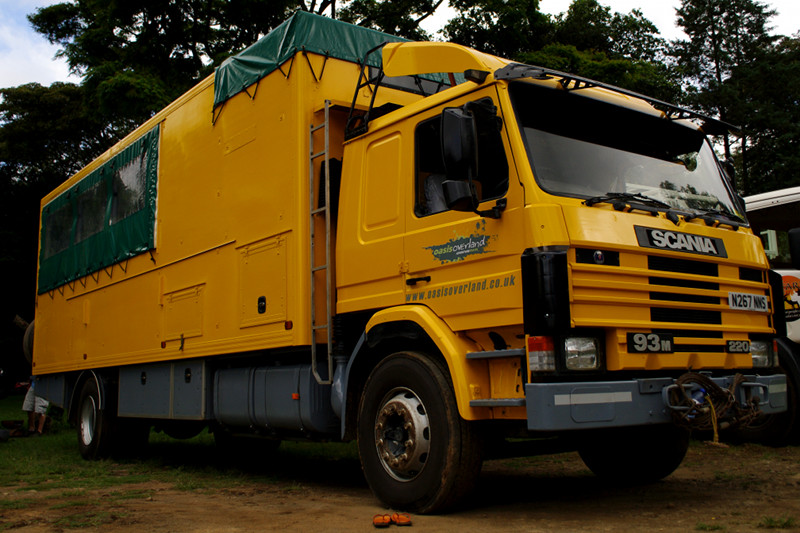
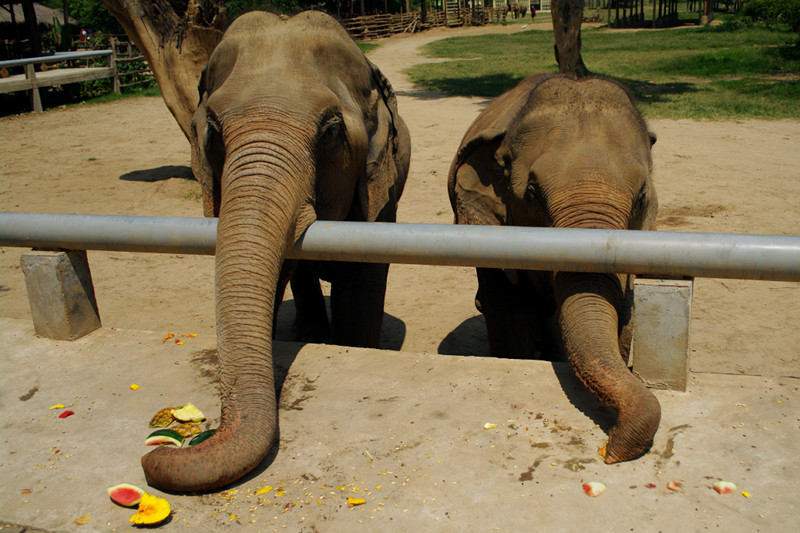
What is this overland travel of which you speak? First, a photo.
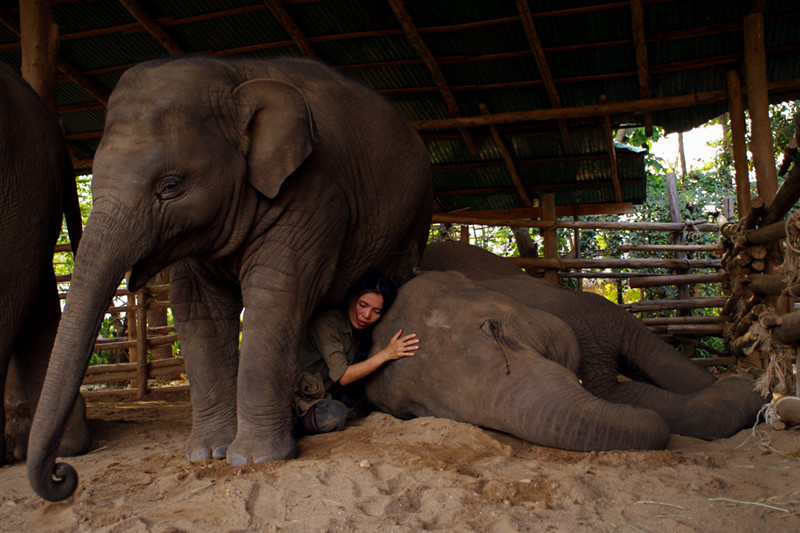
While Stephanie went down to Koh Phangan for a 10 day yoga retreat, I stayed behind in Chiang Mai to volunteer at Elephant Nature Park for a week. The park, founded in the early 1990s by Sangduen “Lek” Chailert, is a sanctuary for domestic Asian elephants that have been rescued from logging and trekking operations, street begging, and performing. Many of the elephants have serious physical and mental handicaps, due to mistreatment, malnourishment, and/or the hardship of the labor they endured.
Lek singing an elephant to sleep (it was standing seconds earlier)
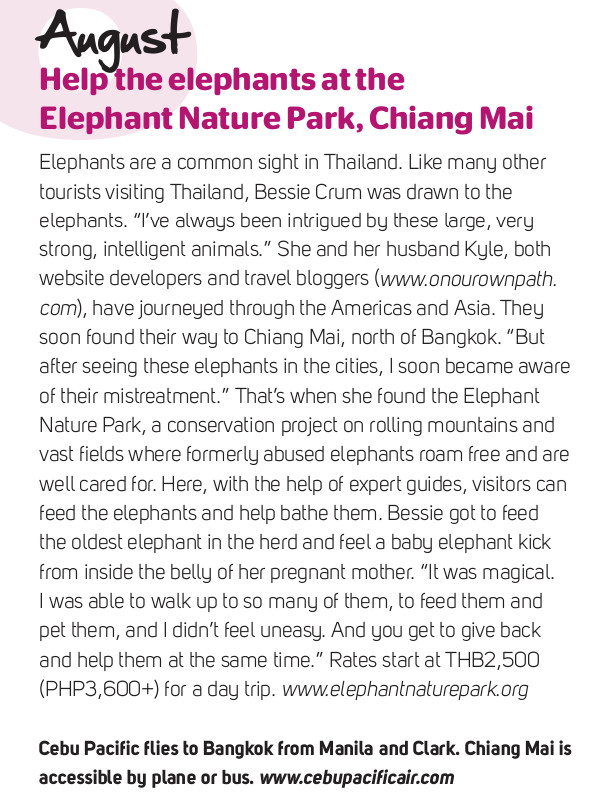
I learned about the park when while traveling in the Philippines, thanks to Cebu Pacific’s in-flight magazine, Smile. Their January issue had a feature on 12 must-do adventures for 2011. One of them was written by bloggers Kyle and Bessie of On Our Own Path (who I later discovered also knew Jodi, my Chiang Mai connection). I read reviews elsewhere about the park, and found people’s reactions to be overwhelmingly positive. It was uncanny. Usually someone comes away from a tourist activity with a “meh”, but almost everyone counted the visit as a highlight of their trip to Thailand—if not their lives. My curiosity was piqued.
I expected to be one of maybe 3-5 volunteers. The online application is surprisingly thorough (educational and employment history, essays on why you want to volunteer, general interests, etc.) and it actually costs money: 12,000 baht/week (~$400 USD)—a little steep for your average Southeast Asia backpacker (though to be fair, they house and feed you, and much of the money goes to the elephants). As it turns out, there were more than 30 volunteers starting with me, many staying for two weeks.
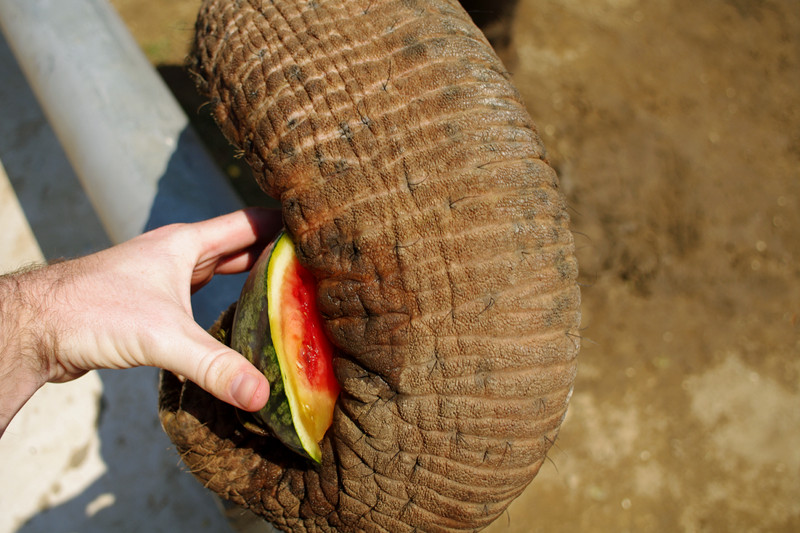
The program was very well organized. From their office in Chiang Mai we were bused to the park an hour away, which included a viewing of a well-produced documentary about the plight of elephants in Thailand on the way. The first day was similar to what one might encounter on a day tour (which Stephanie squeezed in before she left for her yoga retreat), predominantly centered around feeding and bathing the elephants. Then we continued with various volunteer orientations, including a welcoming ceremony by the local village’s spiritual leader.
On the plus side, our new bungalow in Amed has wireless internet at 40,000 rupiah/hour, on the downside, they block port 22—a first in all of my travels! So I couldn’t SSH into my webhost and update Justinsomnia or La Vie Soleil via Subversion. Angst!
Bloglines was my first and only feedreader. I’ve been using it for over five years. Until leaving on the trip, it was one of the sites I checked daily—actually multiple times throughout the day: Bloglines, Gmail, Justinsomnia, and repeat. For me it “just worked”. To bad there isn’t some way for Bloglines to exist outside of Ask. Oh well, *kicks stones aimlessly*.
Update: I trimmed my blog subscriptions down to 67, and imported everything into Google Reader.


 Old news, but finding this out made me sad: