Immediately after our Abel Tasman Tramp, we spent a week in Upper Moutere wwoofing—volunteering on an organic farm for 5-6 hours a day in exchange for room and board.
A curious goat
Every morning around 8:30 and every evening at 6:30 we were responsible for milking 8 to 10 goats. To make things more efficient, Stephanie handled the mechanics of milking, while I was the self-appointed goat runner, bringing goats back to the paddock (pasture) when they were done. If you’d like to vicariously milk a goat with Stephanie, check out the video we made of the process on her post, How to milk a goat.
Testing the milk
After the morning milking and before breaking for lunch at 1, we’d help with various chores in the gardens, including staking peas, digging up thistle in the pastures, cleaning out animal stalls, pulling up kale roots, weeding carrots and parsnips, and harvesting fava beans and peas for the market. Then we’d take the afternoon off before the evening milking and dinner.
Long shadows on a dirt road
The food was hearty, filling, and largely homemade. Breakfast was toasted slices of dense whole wheat bread, butter, jam, and tea. Lunch was a combination of leftovers from dinner with bread and cheeses made from the goat milk (chevre and feta). Dinner ran the gamut: spinach quiche, roasted vegetables, lamb chops (hoggit raised on their farm), pasta with vegetables. Potatoes were a frequent side dish, often simply boiled, as were stir-fried leafy-greens. Most nights there was a dessert: fresh fruit crumble, “pudding” with ice cream, chocolate cake. The farm supplied the bulk of the food (fruits, vegetables, meat, cheese), and the rest was supplemented with things from the store (flour, pasta, sugar, butter, peanut butter, oil, tea) and things they got from other farmers/food-producers in trade.
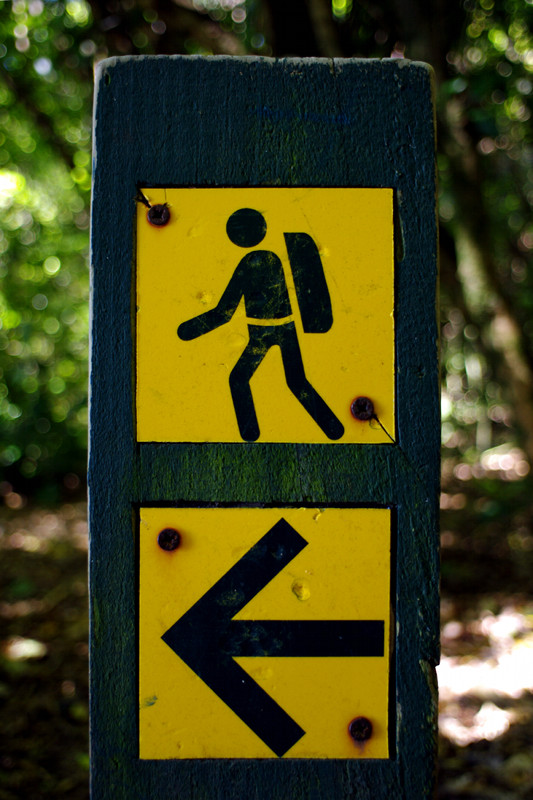
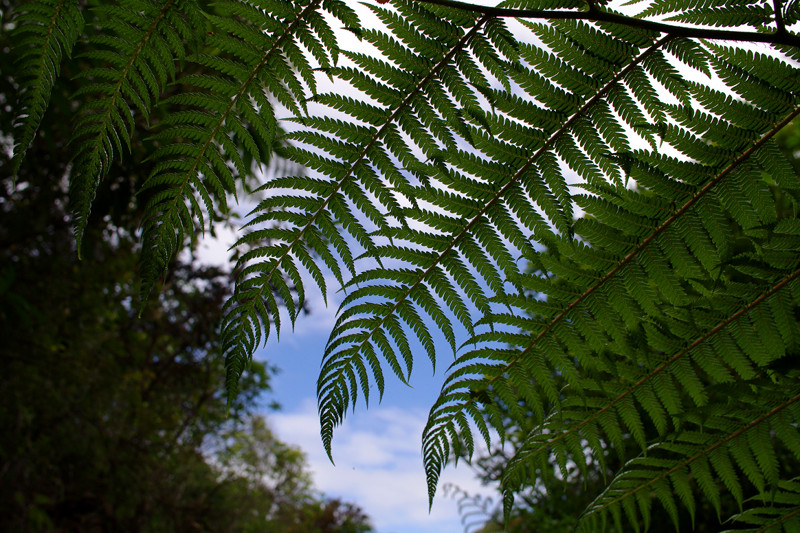
We started on the Abel Tasman Coast Track around 2:30. The skies were fairly overcast, so we hoofed it to Anchorage Bay, just under 4 hours away. The first bit starts off along a boardwalk, and after that it cuts into the dense coastal bush, which is like walking through a green tunnel made of ferns the size of palm trees.
We got to the hut a little later than most people. The hut was a building made up of a central kitchen room with counters, sinks, and communal tables, which was flanked by rooms with bunks, each with space for about 6 people top and bottom. We found one of the rooms mostly full, but the other had unclaimed mats on the top bunk, so we rolled out our sleeping bags to mark our spots.
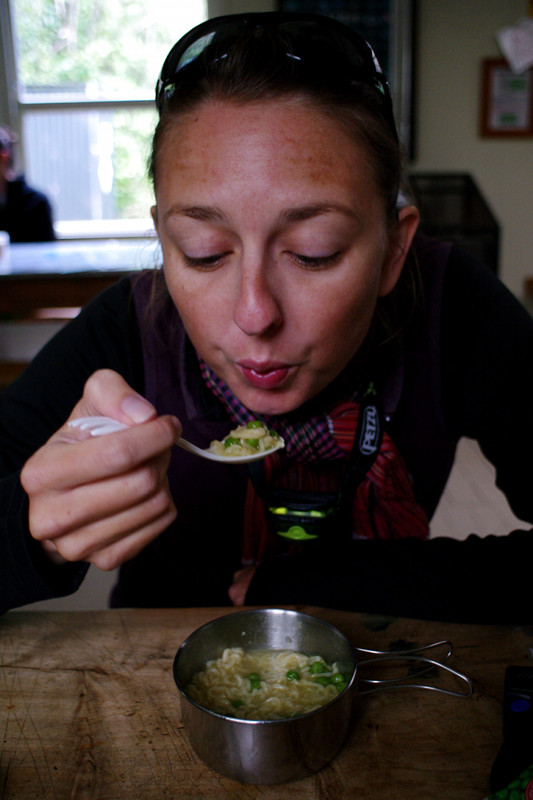
Dinner was ramen noodle soup. It was very filling, which was very satisfying. Later that night Stephanie struck up a conversation with a French-German couple sitting next to us who were spending their honeymoon in New Zealand for two weeks. They seemed impressed by our willingness to step away from our lives back home and travel for an indefinite period of time.
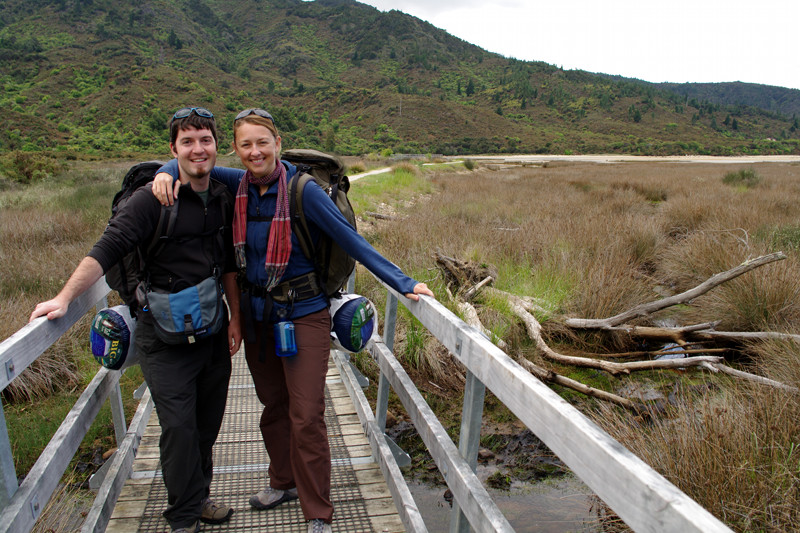
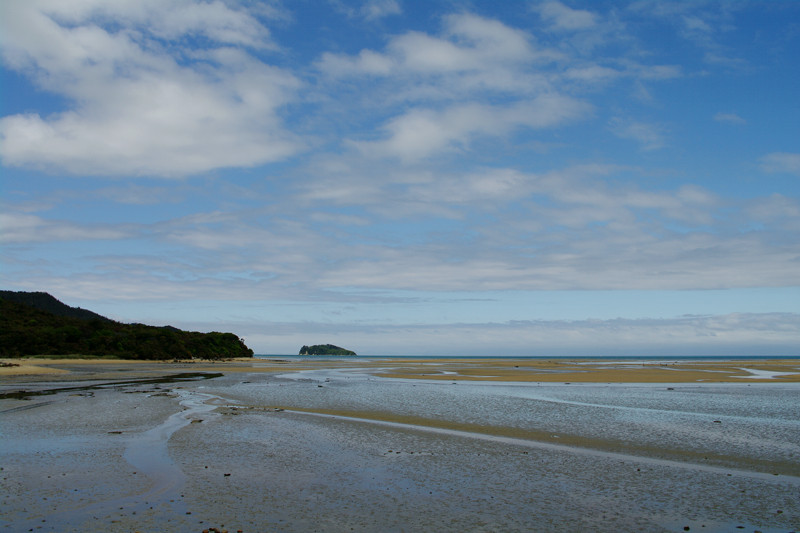
Tramp on!Both of us at the start of the trackView towards the sea at low tideThe obligatory fern shotStephanie blowing on her ramen
I took 246 photos while hiking Franz Josef Glacier—which made it very hard to select only a few to illustrate my previous post. So I’ve decided to put together a follow up with some additional photos that form a sort of portrait of Franz Josef Glacier. No frills, no captions, just 100% all natural, glacier porn. Enjoy responsibly.
We set the alarm for 7 on Monday. It was cloudy, but at least it wasn’t raining. We made ham sandwiches and got some snacks and clothes together for the day ahead. We walked to the Franz Josef Guides location and met up with the 31 other people who were doing the full-day guided hike. After signing in, we went through an assembly-line process to collect rain pants, boots, wool socks, crampons, rain jacket, hat, and mittens. Luckily the weather was supposed to be good, so the jacket, pants, hat, and mittens were for warmth/necessity only. From there they bused us to the trailhead, and we started hiking up to Franz Josef Glacier. They split us into three groups of 11 people, based on our self-assessed agility, and to reduce the “visual pollution” of large groups on the glacier. Stephanie was a little nervous about the crevasses and ice caves, so we went with group 2. Each group had a guide, ours was led by Jimmy, who was being trained by Kruddy (nickname for his longer Māori name).
We crossed the ropes at the end of the public trail, and started hiking up a part of the glacier that didn’t look much like a glacier, as it was covered with a thick deposit of gravel that had washed out of the glacier several years back. This made the initial ascent, via a series of switchbacks in the gravel, much easier. Once we got to the top of this mountain of gravel, we put on our crampons and took our first steps on the exposed ice. It was a lot crunchier than I expected, like a bag of ice cubes from the supermarket that’d frozen into a solid block.
For the next several hours, Jimmy and Kruddy led us on a trail up about 1/10 of the glacier’s total length. Frequently they’d stop to widen the trail or dig out a step in the ice with their massive pick-axes. We each had smaller ice-axes, primarily to give us a third point of contact, but also to make us look good in photos. The further up the glacier we traveled, the more dramatic the features in the ice became. Eventually we came to our first crevasse, a narrow passageway, 20-30 meters long, that in some places was not wide enough for both feet side-by-side. It was here that the ice was the bluest. Even I was a little worried about being claustrophobic, but it turned out to be more awe-inspiring than anything else. Later we ventured into an ice cave that had only opened up the day before. We got to it by climbing down a steep series of steps with a rope anchored into the ice for support.
The changeability of the glacier was one of the most interesting aspects of the trek. Since the glacier is moving one meter a day, its features are constantly morphing and melting. If we came back in a year, we’d be led along a completely different route, with entirely different features. Of all the different activities we’ve undertaken in New Zealand so far, I think this has been my favorite. Partly because it was so different from anything I’ve done before, and partly because the glacier was so beautiful.
Hiking towards Franz Josef GlacierConfronting the ice faceCrampon karate!Hiking onto the glacierLooking up the glacierThe group with their ice axesView of the valley carved by Franz Josef GlacierStanding on some blue ice (pants tucked into socks for safety!)Entrance to a crevasseFurther inside the crevasseCompletely enveloped by blue iceStephanie and Justin in a cave of blue iceLooking up towards the sculpted ceiling of the ice cave
It was beautiful on Sunday. Almost completely clear skies. After breakfast we drove to Fox Glacier and hiked up the glacier view trail. It was awesome to walk through a rainforest and emerge in a giant valley full of moving ice. Even more awesome is the fact that it’s usually rainy, cloudy, or foggy here, and we were getting the chance to see the glacier against blue skies. After we’d taken the trail as far as it was safe to go without a guide, we headed back to the car and continued up the road to the township of Franz Josef. Given the promise of good weather the next day, we scheduled a full-day, guided glacier hike at Fox’s glacial sibling. Then we settled down for lunch—and I had my first New Zealand whitebait: a sort of omelette made with little minnows.
Turquoise pool in front of Fox GlacierLooking back at the valley carved by Fox Glacier (which was filled with ice less than 100 years ago)As close as we could get to Fox GlacierThe whitebait patties have eyes!!! (tasty, tasty eyes)