We set the alarm for 6am on Tuesday morning. Eve, one of our guides for the day, picked us and another couple up from the holiday park in Te Anau at 6:50. It’s a two hour drive from Te Anau to Milford Sound—we were glad not to be the ones driving for a change. We met the rest of the group and our other guide, Abby, at the Milford Lodge at 9, and then headed down to the launch spot to get geared up. I think there were about 10-12 of us in all.
We stripped down to our underwear/bathing suits, and they provided us with polypro long underwear (tops and bottoms), a thick fleece pullover, a neoprene skirt (to seal us to the kayak), a bright yellow rain jacket, and a lifevest. On previous kayaking trips I’ve taken a little water inevitably gets in the bottom of the kayak, resulting in wrinkly toes and a wet butt—but here they were serious about staying dry (which I appreciated).
Touring Milford Sound (it’s a fjord actually) is big business. During the high season, some 400 small planes and helicopters land in their small airfield, making it one of the busiest airports in New Zealand. Apparently radar is ineffective given the steep mountain walls, so flights have to be canceled when there is limited visibility.
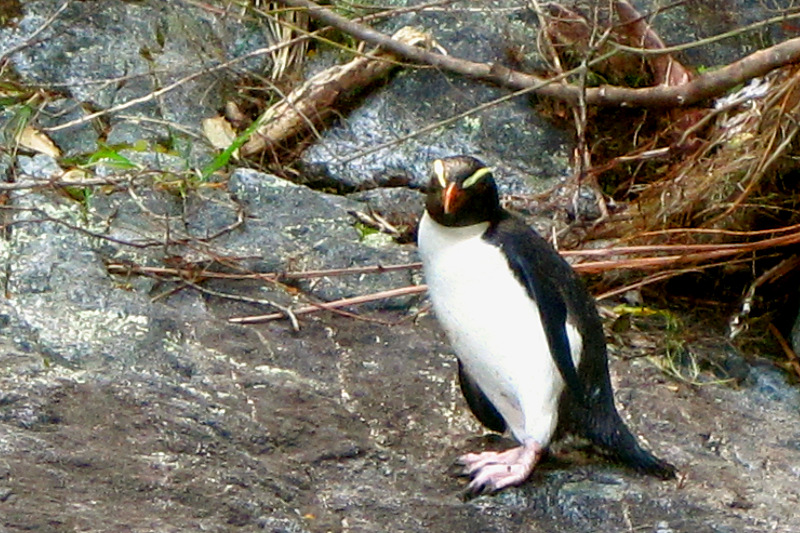
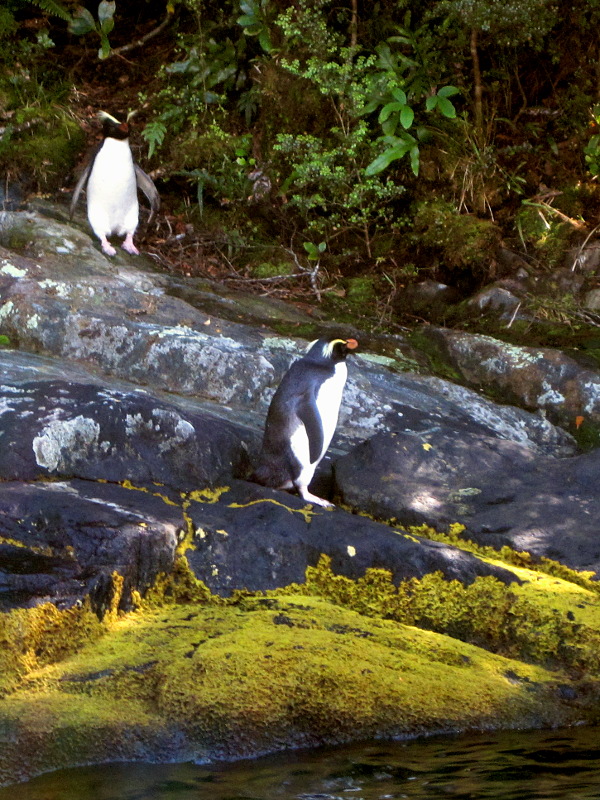
Over the next four hours we paddled around the fjord in tandem kayaks, making a big loop, but staying pretty close to the walls. We saw a waterfall that’s higher than Niagara and got great views of Mitre Peak, but the surprise highlight of the trip was seeing three wild Fiordland Crested Penguins on land up close. It had been a month or more since the guides had seen any on land, so they were just as stoked as we.
Around 1pm, the daybreeze picked up, and the water went from still to choppy in about half an hour. Luckily the wind blew in the direction of the launch spot, so it was a relatively easy paddle back. I emerged from the kayak with unwrinkly toes and a dry butt—mission accomplished.
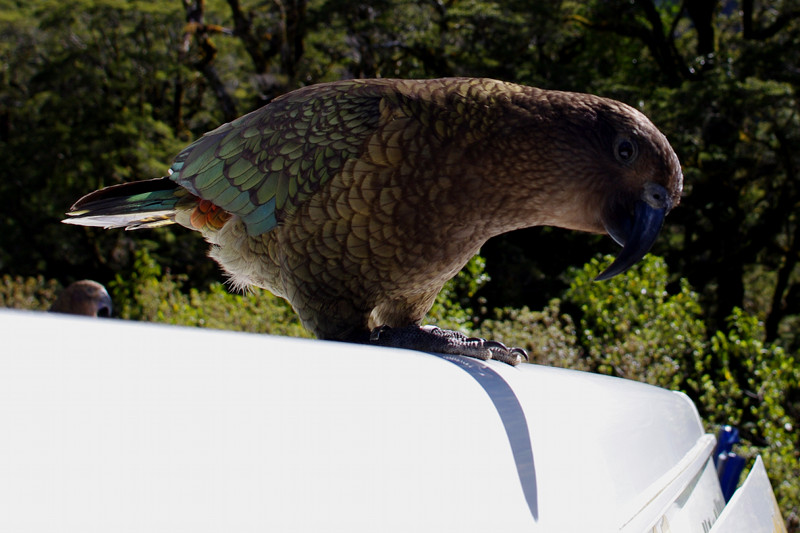
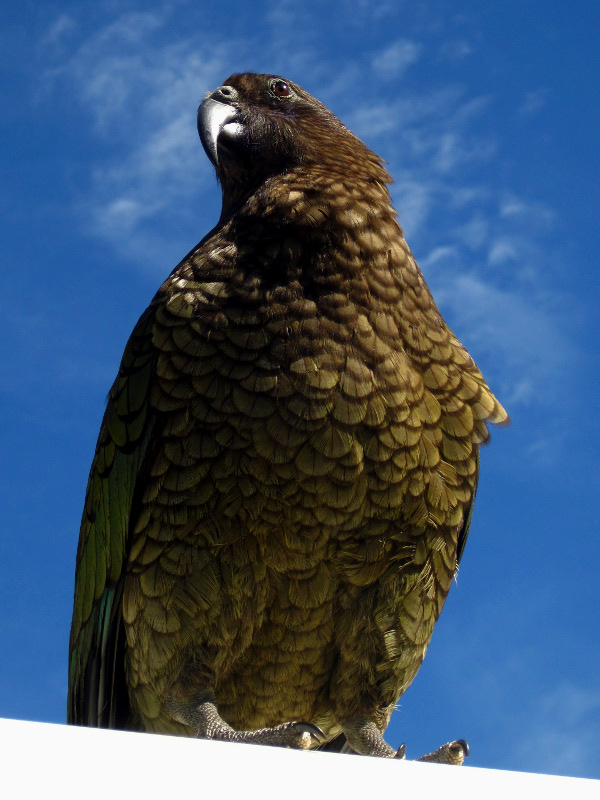
Bonus: On the drive back to Te Anau we stopped at a neat waterfall called “The Chasm” and had a chance encounter with two Keas, the mischievous alpine parrots. They hopped on top of our van to check us out, looking for food no doubt. I’m told in the wintertime they have a particular appetite for windshield wiper blades at ski resorts.
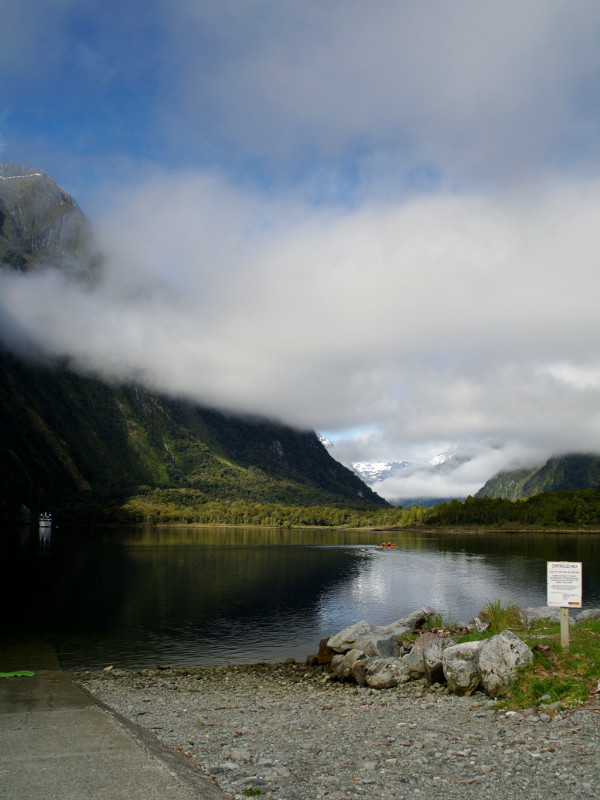
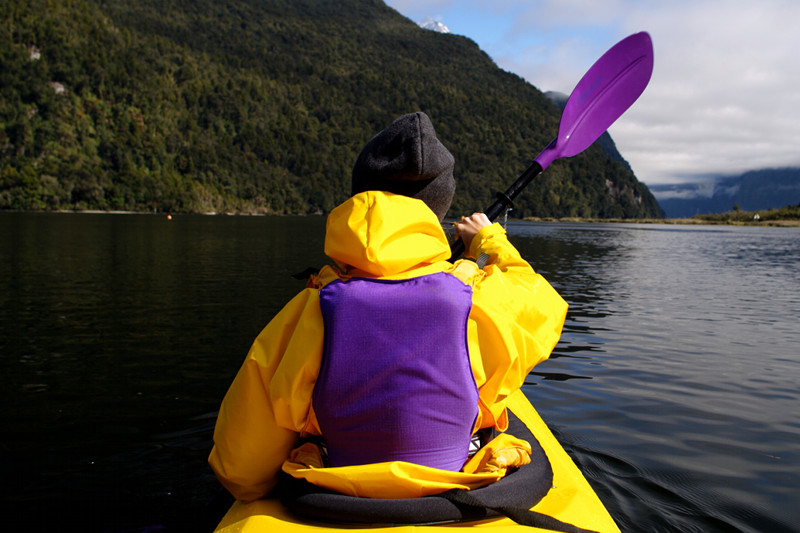
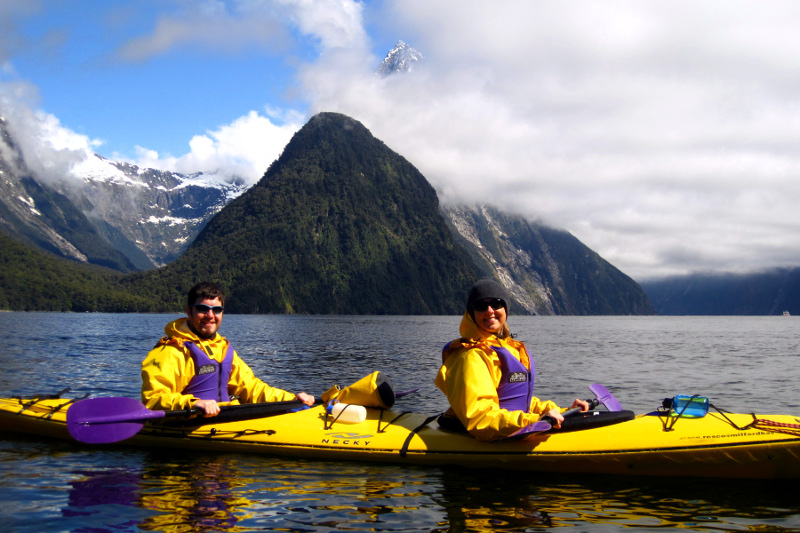
Our Milford Sound launch spotMy view for the day: Stephanie’s back :)A nice shot of the both of usLady Bowen Falls (162m) in Milford Sound
Panorama of kayakers with Mitre Peak enrobed in clouds
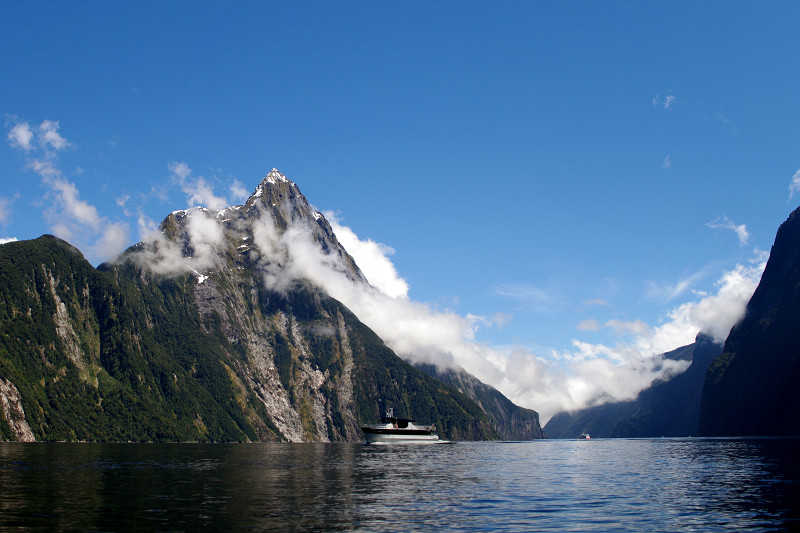
Looking down Milford Sound with a clearer view of Mitre PeakWe saw a rare fiordland crested penguin on land……and then later we were lucky enough to see two more!A curious kea, the alpine parrot, on top of our vanRather regal looking, dontcha think?
Want more? See Stephanie’s post (with some different photos) here.
Before leaving Kaikoura to return our Spaceship in Christchurch on Friday, we walked part way along the Peninsula Walkway and took a few photos of the dramatic Seaward Kaikoura Range and the turquoise Pacific. Afterwards we stopped at the Kaikoura Seafood BBQ stand (“as recommended by Lonely Planet”!) and had half of what they call a crayfish in New Zealand (like a lobster without claws) and a pāua fritter (like an abalone pancake).
The Seaward Kaikoura Range
Pacific view from the Kaikoura Peninsula Walkway
Barbecued New Zealand crayfish (aka “spiny” or “rock lobster”)
It was raining again when we woke up on Thursday. After breakfast, we headed over to Dolphin Encounter to see whether our tour would be going forward. It had been fogged in that morning, but by noon the rain had let up and the sun was breaking through the clouds. They decided to go ahead with the tour—but mentioned that the sea would be rough. We’d already taken the seasickness medication we’d brought (but not needed) for the container ship.
They outfitted us in pretty heavy wetsuits (I think the water temp was ~10°C) and gave us some basic snorkeling training. They said it could take anywhere from 30-45 minutes to locate a pod of the dusky dolphins. They’re wild animals, and they reiterated that they do nothing to train or lure them, there’s always a chance we’d see none at all.
After about 15 or 20 minutes we saw two or three break the surface, but apparently they weren’t interested in us, and swam away. So we continued on for another 5 or 10 minutes before we found a few more. This was it. We pulled on our masks and gloves and prepared to jump into the cold water. They told us the dolphins respond to sound, so for the best experience, we should make loud noises into our snorkel.
With cloudy skies and nutrient rich waters, there was almost no visibility in the water beyond a few feet, so it was a surprise each time to see one or two dolphins swim right by. Sometimes they got very close. And then there’d be nothing for a while except me making dolphin-noises in my snorkel. Then another would swim by, usually coming up from behind me or crossing in front of me.
I rented an underwater camera but most of my photos looked like this:
And this:
I swear a dolphin had just been there!
A few times I managed to capture a fleeting glimpse of a dolphin, like this:
And this:
Even two at once!
I know they were my photos, because I took a shot of Stephanie waving at me in the water:
And she took a shot of me (note the ominous storm clouds in the background):
The Dolphin Encounters folks must have taken pity on me, because they included a bunch of good shots on the CD (taken by other lucky people who had rented the camera before me) that look a lot more like how they do in my memory. Like this:
We made it to Rotorua on Friday, after driving successfully on the left, and stopped at the Thermal Springs Holiday Park for two nights. Having never been to a holiday park before (in New Zealand or elsewhere), I was impressed by the facilities: spacious bathrooms and showers, kitchen facilities with four sets of burners and sinks, hot water dispensers, toasters, a lounge with couches and wireless internet ($4/hour). And best of all, three mineral pools steaming away at a constant 38-40°C (100-104°F). After setting up the Spaceship and making a little dinner, we headed straight for the pools.
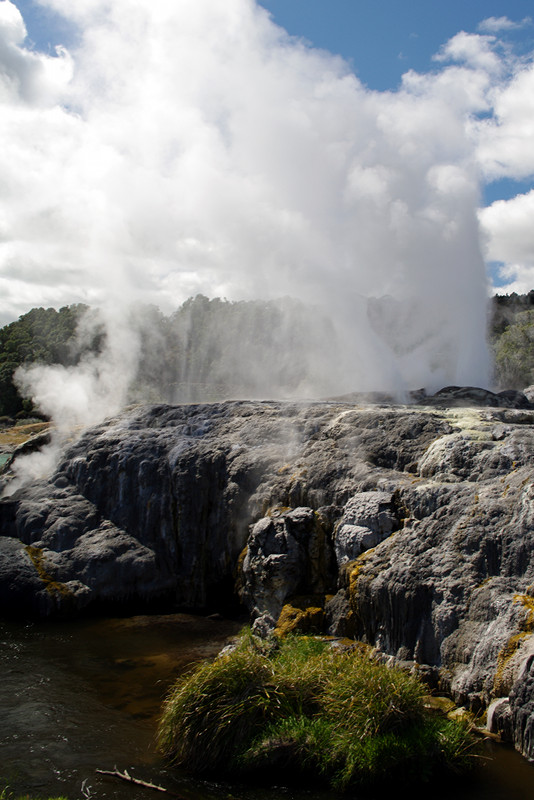
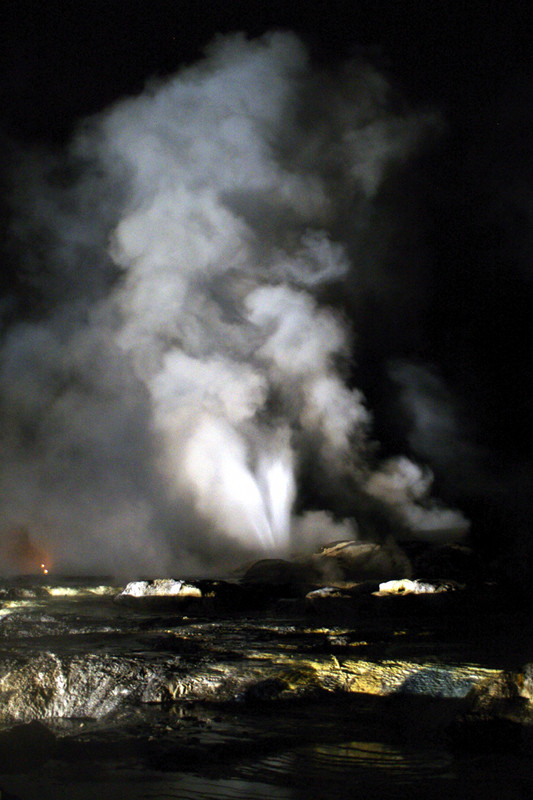
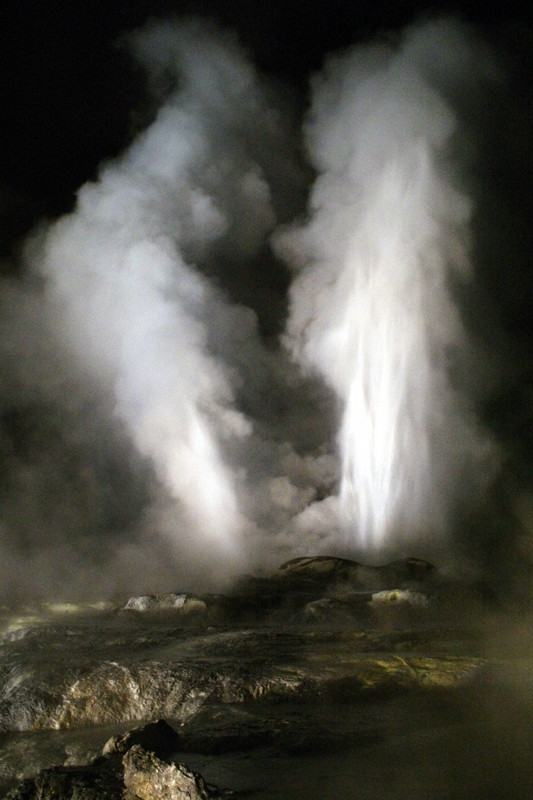
We spent most of Saturday at Te Puia to get our Māori cultural fix, including a viewing of the Pohutu Geyser. We took a guided tour in the morning, drove around Lake Rotorua after lunch, and then returned to Te Puia for the “Indigenous Evening Experience”, a cultural performance (Māori concert) and a hāngī (Māori barbecue) dinner.
The Pohutu Geyser erupts 2-3 times per hourStephanie videotaping Pohutu (shown for scale)The Te Puia marae, or enclosed space, containing the wharenuiPohutu at night, pre-eruptionPohutu erupting at night
While we were at sea, I got a comment from Lisa on my blog who’d read the Metafilter post about our trip via a link in the New York Times. Over email she connected me with her friend Rob who was looking for someone to rent the spare bedroom in his flat. After a few days at the budget hotel, we inquired about the room, it looked nice enough, so we took him up on the offer.
For the last week we’ve been staying at his apartment in the Mission Bay suburb of Auckland, about two blocks from the beach. It’s an hour and a half walk to downtown, or an easy bus ride. It meant we were able to save a little money cooking some meals for ourselves and Rob let us take advantage of his internet so we could plan our next steps.
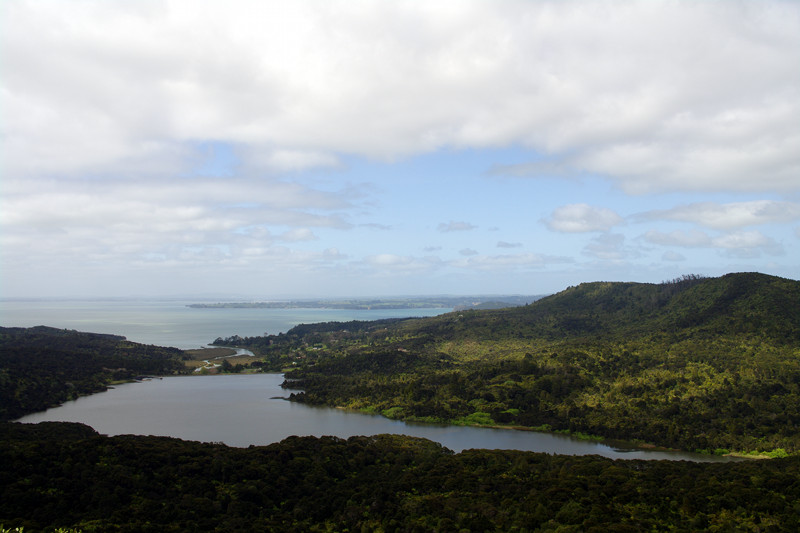
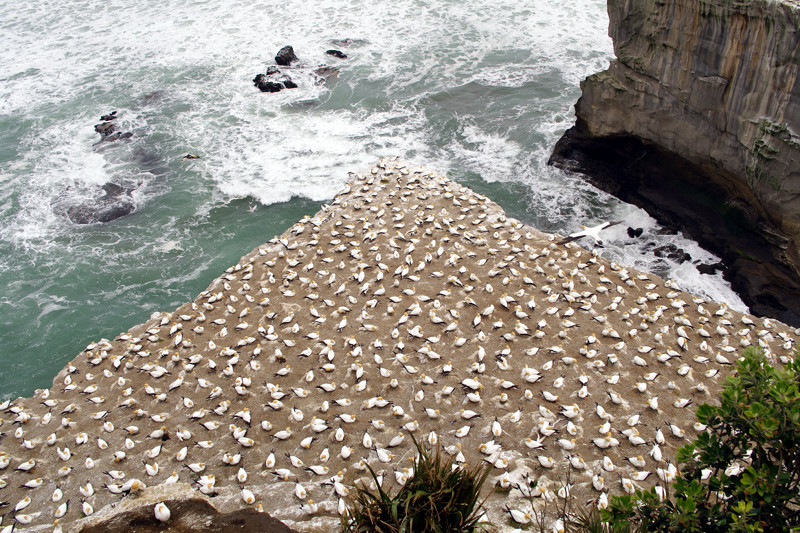
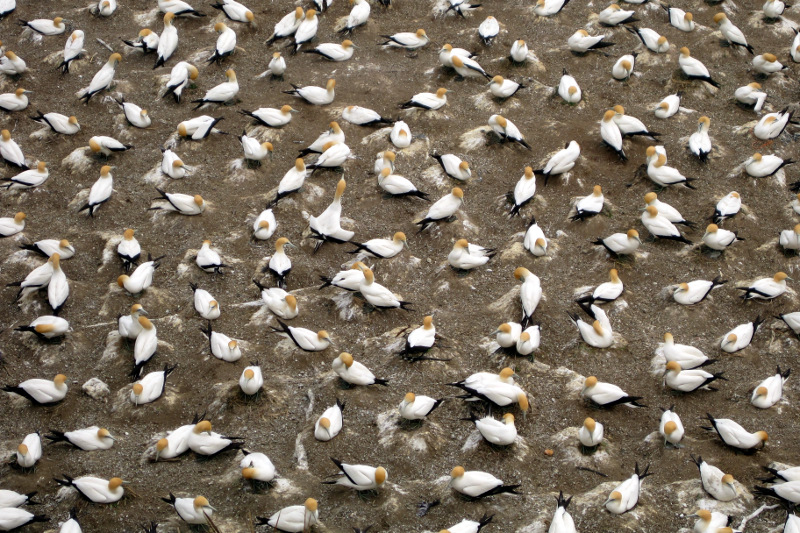
Last Sunday, Rob offered to take us out and show us the area, so we drove with him around Waitakere Ranges Regional Park, checking out Piha Beach, observing a gannet colony on Muriwai Beach, and finally stopping for beer at the historic Puhoi Pub.
View from the Waitakere Visitor’s CenterLion Rock at Piha BeachThe gannet colony at MuriwaiNesting gannets up closeNesting gannets even closer!